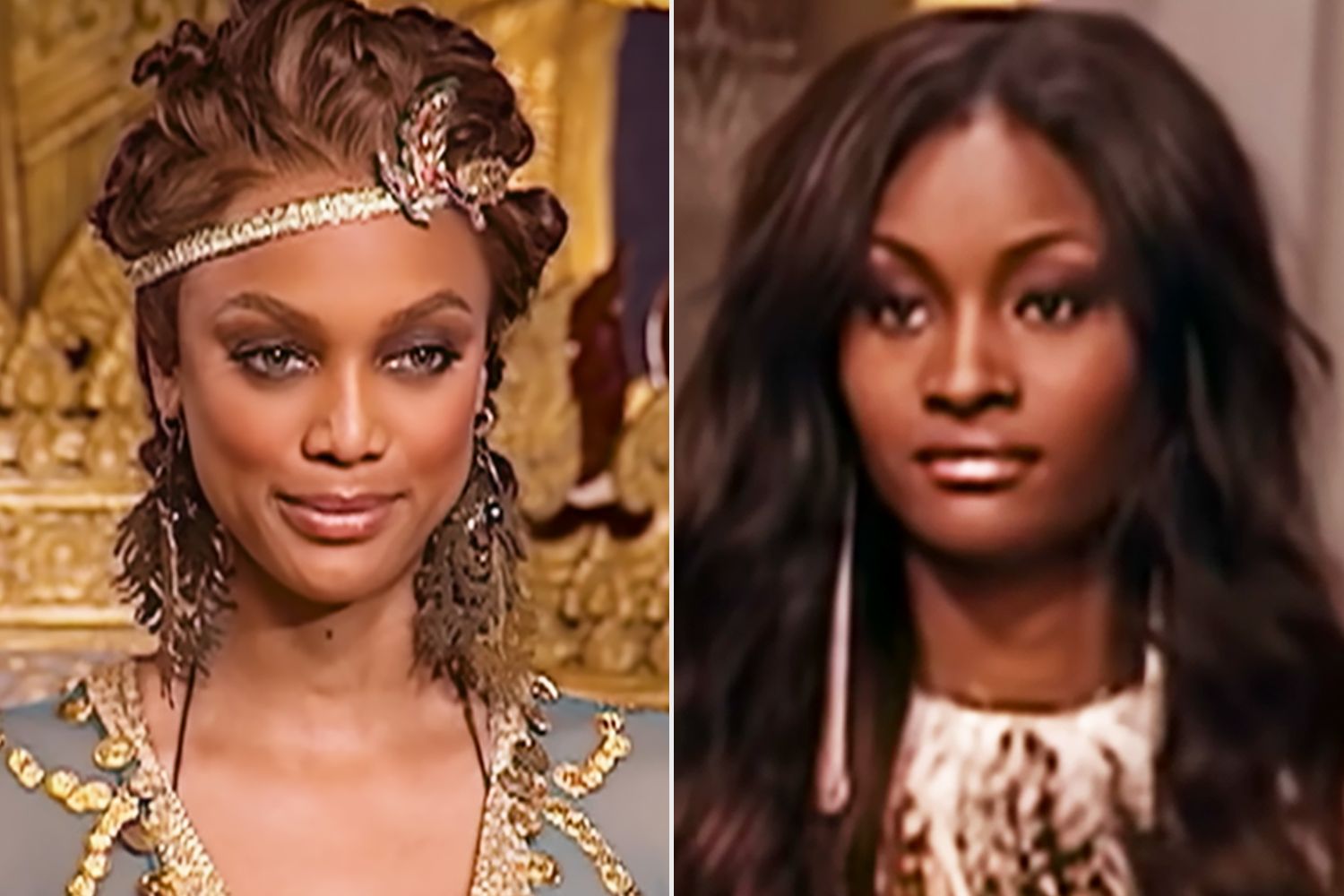
Tyra Banks' Apology Ignites Fresh Debate: Dani Evans Fires Back on ANTM Dental Drama
The world of reality television, particularly the iconic America Next Top Model (ANTM), has once again been thrust into the spotlight, not for fierce poses or dramatic makeovers, but for a long-simmering controversy that Tyra Banks herself has finally addressed. In a candid moment within the new docuseries "Reality Check," Banks offered an apology for an infamous incident during Cycle 6 involving winner Dani Evans and her distinctive dental gap. However, what might have been an attempt at reconciliation has instead reignited a passionate debate, with Evans herself firing back, asserting that the show's actions were less about her career and more about creating compelling, albeit exploitative, television.
This re-evaluation of America's Next Top Model comes at a time when older reality shows are being scrutinized through a modern lens, particularly amplified by social media and a shift in societal values. The conversation surrounding Dani Evans' dental work isn't just about a physical alteration; it's a poignant exploration of beauty standards, contestant exploitation, and the ethical responsibility of those who shape public perceptions on national television.
The Controversy Revisited: Tyra Banks' Apology and Justification
For years, the decision to pressure Dani Evans into having her dental gap closed remained one of the most talked-about and criticized moments in ANTM history. Tyra Banks, the show's creator and host, recently broke her silence in "Reality Check: Inside America's Next Top Model." At 52, Banks expressed regret, stating, "I’ve actually apologized for the issue with Dani and what happened. That was between a rock and a hard place for me."
Banks attempted to contextualize her decision, explaining that the pressure came from external industry demands. "There were agents that would tell me she will not work with those teeth, it's just not going to happen," Banks claimed, reiterating the prevailing, often rigid, beauty standards of the modeling industry at the time. She reflected on the situation with the benefit of hindsight, acknowledging, "Hindsight is 20/20 for all of us. It just so happens that a lot of the things that are 20/20 for me happened in front of the world." This defense suggests Banks felt caught between helping Evans succeed in a demanding industry and allowing her to maintain her unique feature. However, many viewers and critics question whether the show, as an industry powerhouse, had a responsibility to challenge those standards rather than enforce them.
Dani Evans Fires Back: A Reality Check on Reality TV
Tyra Banks' apology, though seemingly heartfelt, did not land well with Dani Evans. Now 40, Evans offered her unfiltered reaction to Banks' comments, dismissing them bluntly: "Bull f---ing s---." Her strong rebuttal underscores a deep sense of betrayal and the lasting impact of the incident. For Evans, the narrative that her gap closure was for her career benefit rings hollow.
Evans articulated a perspective shared by many former reality show contestants: that producers often prioritize entertainment value over genuine welfare or career advancement. "Me getting my gap closed is not opening any doors for me," Evans asserted, directly challenging Banks' justification. Instead, she believes the decision was calculated for dramatic effect. "You knew what you were doing for the show. You were making it good for TV, at my expense." This sentiment highlights the inherent power imbalance in reality television, where contestants, often young and inexperienced, are at the mercy of producers' visions, which may not always align with their best interests.
The Hypocrisy Unmasked: Gaps In, Gaps Out
Perhaps the most damning aspect of Dani Evans' critique comes with her revelation of later cycles of America Next Top Model. Evans pointed out a stark and hypocritical reversal of the show's aesthetic philosophy. On Cycle 15, Banks and her team actually encouraged another contestant, Chelsey Hersley, to *widen* a gap in her teeth. "People have told me one season that she got a gap created in a girl’s mouth," Evans recounted with disbelief. "Girl, that is absolutely ridiculous. What?"
This flip-flop vividly illustrates the arbitrary nature of beauty standards pushed by the show. It suggests that uniqueness was only celebrated when it served a specific, often trending, aesthetic or storyline for television, rather than being a consistent value. The ability to dictate physical changes—whether closing a gap or creating one—reveals a significant control over the models' bodies and identities, sparking questions about ethical boundaries in reality competitions.
Beyond the Gap: ANTM's Broader Legacy of Controversy
The dental drama, while significant, is just one piece of a much larger puzzle concerning the controversies that plagued America Next Top Model throughout its run from 2003-2018. The "Reality Check" docuseries aims to unravel many of these contentious moments, providing a comprehensive look at how the show operated. Other widely debated incidents include:
- Blackface Allegations: Photo challenges on cycles 4 and 13 drew heavy criticism for requiring models to wear dark makeup to portray women of different races, leading to accusations of cultural insensitivity and blackface. As Miss J. Alexander reportedly stated, "I kept saying, 'You guys are putting me in blackface.'"
- Sexual Harassment Claims: An allegation of sexual harassment surfaced during Cycle 4, further tarnishing the show's image.
- Creative Director's Departure: The unexpected firing of longtime creative director Jay Manuel also forms a key part of the "Reality Check" narrative, with Manuel revealing shocking allegations surrounding his exit.
These incidents, alongside the dental gap controversy, highlight a pattern of questionable ethical practices and a disconnect between the show's stated goal of finding diverse talent and its methods. The modern re-evaluation of America's Next Top Model, particularly during the social media age and the COVID pandemic, has allowed for a collective reckoning, where past actions are judged against contemporary values of inclusivity, body positivity, and ethical production. For a deeper dive into these scandals, explore ANTM Reality Check: Unpacking Tyra's Biggest Model Scandals.
The Evolution of Beauty Standards and Media Ethics
The uproar surrounding Tyra Banks' apology and Dani Evans' response reflects a significant shift in cultural perception. What was once accepted or even celebrated as dramatic television is now viewed with a more critical eye. Society has increasingly embraced individuality and diversity in beauty, moving away from monolithic standards enforced by industries like modeling. Unique features, once deemed "flaws" to be fixed, are now often celebrated as distinguishing characteristics that make models stand out.
Moreover, the ethical responsibilities of reality TV producers are under greater scrutiny. The manipulation of contestants, the crafting of narratives at individuals' expense, and the potential for psychological harm are all factors that audiences and critics are no longer willing to overlook. This evolving media landscape demands greater transparency, accountability, and a commitment to participants' well-being.
Lessons from the Runway: What We Can Learn from ANTM's Past
The ongoing discussion around America Next Top Model offers valuable insights for both creators and consumers of media:
- Challenge Industry Norms: Rather than conforming to outdated industry standards, powerful platforms like ANTM had an opportunity to redefine beauty and challenge archaic demands. There's a responsibility to lead, not just follow.
- Prioritize Authenticity Over Drama: While reality TV thrives on drama, there's a fine line between compelling storytelling and exploiting individuals for entertainment. True value lies in authentic narratives and respectful representation.
- Empower Contestants: Participants in reality shows, particularly younger individuals, need robust support systems, clear ethical guidelines, and agency over their own bodies and images.
- Critical Media Literacy: As viewers, it's crucial to approach reality television with a critical eye, questioning narratives, understanding production techniques, and recognizing the potential for manipulation.
- Embrace Uniqueness: Dani Evans' initial gap was part of her identity. The episode serves as a powerful reminder that true beauty often lies in what makes us distinct, not in conforming to a narrow ideal.
The "Reality Check" docuseries and the subsequent reactions underscore the profound impact shows like America Next Top Model had on contestants and viewers alike. It forces us to reconsider the legacy of such programs and the true cost of chasing "perfection." For more on the show's impact and Tyra Banks' role, read America's Next Top Model: Re-evaluating Tyra's Legacy & Controversies.
Conclusion
Tyra Banks' long-overdue apology for the Dani Evans dental gap controversy on America Next Top Model has done little to mend fences, instead highlighting the deep-seated grievances of former contestants and the ongoing ethical reckoning within reality television. Dani Evans' powerful response reminds us that behind the glitz and glamour of the runway lies the very real experiences of individuals whose lives were shaped, for better or worse, by the show's decisions. This dialogue serves as a vital reminder for all media creators to prioritize ethics, authenticity, and the well-being of their participants, and for audiences to engage with content critically, recognizing the power dynamics at play. As the legacy of ANTM continues to be re-evaluated, the conversation around beauty, individuality, and responsible entertainment is far from over.